Side dish · Chinese home cooking
Hot and Sour Potato Shreds: 20 Minutes, No Oven
酸辣土豆丝:20分钟,不用烤箱
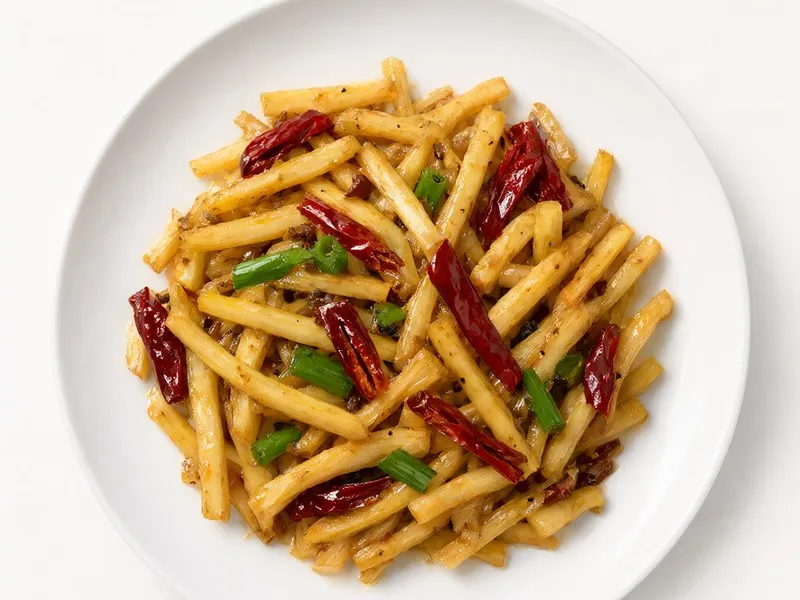
Crisp julienned potatoes with vinegar, dried chillies and Sichuan pepper — the cheap, fast stir-fry every student should know. The secret is rinsing the starch off.
- Total
- 20 min
- Hands-on
- 12 min
- Yield
- Serves 2
Ingredients 食材
- 2 medium potatoes, about 500 g中等土豆 2 个,约 500 克
- 4 dried red chillies, snipped into pieces干红辣椒 4 个,剪段
- 1 tsp Sichuan peppercorns花椒 1 小勺
- 2 tbsp rice vinegar, 1 tsp salt, 1 tsp sugar米醋 2 勺、盐 1 小勺、糖 1 小勺
- 3 cloves garlic, 2 scallions蒜 3 瓣、小葱 2 根
What to buy 怎么买
Russet or Yukon Gold potatoes. Russets are floury and crisp up well after rinsing; Yukon Golds hold their shape but brown less. Use plain rice vinegar, not seasoned sushi vinegar, which contains sugar and salt.
Russet 淀粉多,冲洗后更容易炒脆;Yukon Gold 更挺但上色浅。米醋要买纯的,别用含糖盐的寿司醋。
Method 做法
- 1Peel the potatoes and cut them into 3 mm slices, then into 3 mm matchsticks. Uniformity matters more than speed; thick and thin pieces cook at different rates.土豆去皮切 3 毫米片,再切 3 毫米丝。均匀比快更重要,粗细不一熟得不一样。
- 2Put the shreds in a bowl of cold water, rub them gently, and rinse until the water runs clear. Drain and pat dry.土豆丝放冷水里轻轻抓洗,换水冲到水清。沥干并按干。
- 3Mix the vinegar, salt and sugar in a small bowl. Have it within reach before the pan gets hot.米醋、盐和糖在小碗里调好,放在手边再开火。
- 4Heat a wide pan or wok over high heat with two tablespoons of oil. Add the dried chillies and Sichuan peppercorns and stir for ten seconds, until fragrant but not black.宽锅或炒锅大火放两勺油,下干辣椒和花椒炒十秒,出香但别发黑。
- 5Add the garlic and potatoes and stir-fry over the highest heat for two minutes. The pan should hiss; if it does not, it is not hot enough.下蒜和土豆丝,最大火翻炒两分钟。锅里应该一直响;不响说明火不够。
- 6Pour the vinegar mixture around the edge of the pan, toss for another minute, then fold in the scallions and turn off the heat. The shreds should still be crisp.醋汁沿锅边淋入,再翻一分钟,拌入葱花关火。土豆丝应该还是脆的。
Hot and sour potato shreds are the cheapest dish in this collection and one of the hardest to get right. The ingredients are a couple of potatoes, vinegar, chillies and salt. The technique is everything. Cooked badly, the shreds turn into a sticky, pale mash. Cooked properly, they stay crisp, taste sharply sour, and carry a slow chilli warmth that makes a bowl of plain rice disappear.
It is also the dish that teaches the single most useful habit in Chinese stir-frying: prepare everything before the pan gets hot. From the moment the potatoes go in, the whole thing takes three minutes. There is no time to hunt for the vinegar.
Starch is the enemy
A potato is mostly water and starch. Cut it into shreds and you expose an enormous surface area, and that surface starch turns gluey the moment it meets heat and moisture. Soaking and rinsing removes it. The water should go from cloudy to clear before you stop.
Do not skip drying the shreds either. Wet potatoes drop the pan temperature, and a cool pan steams instead of frying. A clean tea towel or a salad spinner works; paper towel is fine but you will use a lot of it.
Some cooks soak the shreds in vinegar water to firm them. It helps a little, but rinsing is the essential step. If your potatoes are waxy rather than floury, you can get away with a shorter rinse; if they are floury, rinse twice.
Vinegar goes in late
The sourness of this dish comes from vinegar added near the end, not at the start. Vinegar’s sharp aroma is volatile; boil it for ten minutes and you get a dull acidity without the brightness. Pour it around the rim of the pan, where it hits hot metal and blooms into steam, then toss once and take the pan off the heat.
Rice vinegar is the standard choice because it is sharp and clean. Black vinegar brings colour and a malty sweetness that belongs in braises and cold dishes, not here. If you only have balsamic, do not use it — the sweetness is wrong.
Chilli and pepper are separate layers
Dried red chillies give heat and a toasted aroma. Sichuan peppercorns give the numbing tingle. They go into the oil first, at a moderate temperature, just until they smell fragrant. Ten seconds is usually enough. If they turn black, the oil is bitter and there is no fixing it.
If you want more heat, add a fresh green chilli with the garlic. If you want less, remove the chilli seeds before snipping the pods. The dish should be hot enough to notice, not hot enough to stop eating.
The home-cook’s wok problem
Restaurant versions get a smoky char from a burner most homes do not have. You can approximate it by using the widest, heaviest pan you own, heating it until it just starts to smoke, and cooking the potatoes in a single layer. A crowded pan drops in temperature and steams; a hot pan with room to breathe browns the edges.
Do not cook more than two servings at once. If you need a larger batch, cook it in two rounds and keep the first warm while the second cooks. It takes four minutes total and the texture is worth it.
Serving and variations
Serve immediately. The shreds soften as they sit, and the point of the dish is the contrast between crisp potato and soft rice. A fried egg on top turns it into dinner; a handful of shredded pork, browned first and set aside, turns it into a fuller meal.
Leftovers do not reheat well. If you have some, eat them cold with a little more vinegar and sesame oil, more like a salad than a stir-fry.
Questions 常见问题
My potatoes turned soft and sticky. Why?
Almost always unrinsed starch. Shredded potato releases a lot of surface starch; rinse until the water is clear and dry the shreds well before they hit the pan.
Rice vinegar or black vinegar?
Rice vinegar gives the clean, sharp sourness this dish is named for. Black vinegar is heavier and sweeter; if that is all you have, use half the amount and add a splash of water.
Can I use a mandoline?
Yes, a mandoline with a julienne blade saves ten minutes and gives more even shreds than hand-cutting. Use the guard; potatoes are exactly the vegetable that takes fingertips with them.