Main course · Chinese home cooking
Egg Fried Rice From Last Night's Leftovers
隔夜饭蛋炒饭
Why day-old rice is non-negotiable, the gold-wraps-silver technique of coating grains in egg before frying, and the soy-at-the-pan-edge trick that gives aroma without sogginess. Ten minutes, one pan.
- Total
- 10 min
- Hands-on
- 3 min
- Yield
- Serves 2
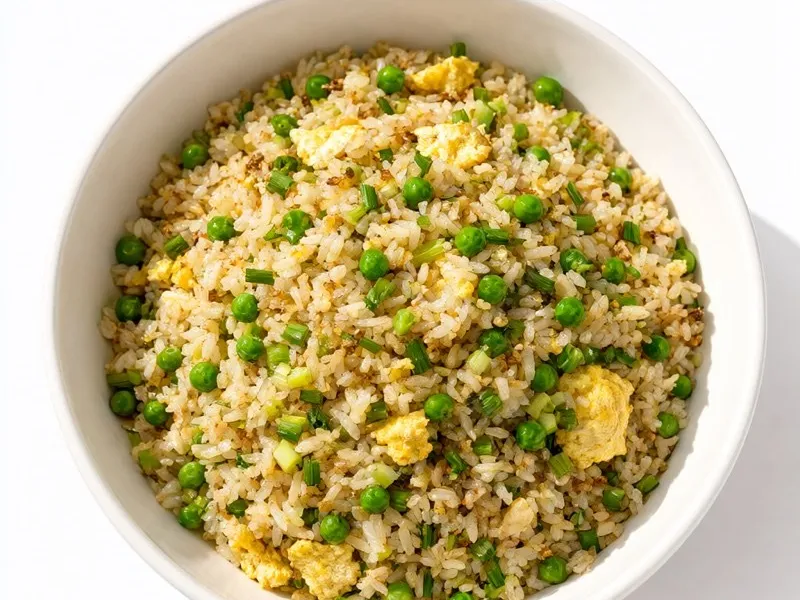
Ingredients 食材
- 2 bowls of cold cooked rice, ideally day-old冷饭 2 碗,最好隔夜
- 2 eggs, beaten鸡蛋 2 个,打散
- 2 scallions, finely sliced小葱 2 根,切葱花
- 1 teaspoon light soy sauce生抽 1 茶匙
What to buy 怎么买
Day-old jasmine rice. Use cold leftover jasmine or long-grain rice from the fridge; freshly cooked rice releases too much steam and turns the pan mushy. If you only have fresh rice, spread it on a tray and let it dry for at least fifteen minutes.
用冰箱里冷藏过的茉莉香米或长粒米;新煮的饭水汽太大,下锅容易黏成团。只有新饭的话,摊在盘子里晾至少十五分钟。
Method 做法
- 1Break up the cold rice with wet hands or a fork until no clump is bigger than a grape. Clumps now are clumps forever.用湿手或叉子把冷饭捏散,到没有比葡萄更大的饭团。现在散不开,下锅就永远散不开。
- 2Pour the beaten egg over the rice and toss until every grain is coated yellow. This is the gold-wraps-silver method, and it is what keeps eggs from turning into separate rubbery lumps.蛋液浇在饭上拌匀,让每粒米都裹上黄色。这就是「金包银」,也是蛋不会变成一块块橡皮的原因。
- 3Heat a wide pan until a drop of water evaporates on contact, add oil, then add the rice in one layer. Press, then chop with the spatula edge to separate grains.宽锅烧到水滴下去立刻蒸发,下油,饭铺成一层。先压、再用铲边切散。
- 4Fry until the grains hop and you hear a faint crackle, three to four minutes. Do not stir constantly; let the bottom catch a little colour.炒到饭粒会跳、能听到细微的噼啪声,三到四分钟。别不停翻,让底面稍微上色。
- 5Drizzle the soy sauce around the pan edge, not onto the rice, so it sizzles and perfumes instead of soaking in. Add scallions, toss twice, serve.生抽沿锅边淋一圈而不是浇在饭上,让它嗞出香气而不是把饭泡湿。下葱花,翻两下,出锅。
Fried rice is the most misunderstood five-ingredient dish in home cooking. People treat it as a way to use up leftovers, which it is, and conclude that it therefore requires no technique, which it absolutely does. The difference between the glistening, separate-grained fried rice of a good cantonese kitchen and the pale mush of a sad dorm pan comes down to three decisions, all made before the pan is even hot.
Decision one: the rice must be old
Freshly cooked rice is steam-saturated. Each grain wears a film of surface moisture, and moisture is the enemy: it turns frying into steaming. Rice that has sat in the fridge overnight loses that film; the grains firm up and dry out, which is exactly the state you want. This is why fried rice is fundamentally a next-day dish, and why restaurants cook their rice the day before service.
If you only have fresh rice, you can rescue it by driving off surface steam: spread it on a tray and let it stand for fifteen minutes, or cheat with ten minutes in the freezer. What you cannot do is throw steaming rice straight into a pan and expect fried rice. You will get porridge with opinions.
Decision two: coat the grains in egg first
There are two schools. The common one cooks egg first, removes it, fries rice, then reunites them. The better one — called gold-wraps-silver, after the colour of egg-coated grains — beats the egg and tosses the cold rice in it before anything touches heat. Every grain arrives at the pan already sealed in a thin egg film, so the egg sets as a lacquer on the rice instead of coagulating into separate rubbery curds. The result is uniformly yellow, glossy, and impossible to over-egg.
Decision three: soy at the edge, never on top
Light soy sauce added directly onto rice makes it wet and patchily brown. Added around the hot pan edge, it hits bare metal, sizzles, and vaporises into an aroma that coats the rice from the steam side. You get the smell and the savour without the sogginess. One teaspoon is plenty; fried rice seasoned correctly tastes of rice and wok, not of soy.
The seven minutes at the stove
Get everything within arm’s reach first, because once the pan is hot you will not leave it. Wide pan, properly hot — a flicked drop of water should vanish on contact — then oil, then rice in a single layer. Press gently to flatten, then chop with the spatula edge to separate grains. Resist the urge to stir constantly: brief contact with hot metal is what gives you the faint toasted notes that home cooks chase and call wok breath. When the grains start hopping in the pan and you hear a light crackle, the rice is done. Soy at the edge, scallions in, two tosses, out.
Leftover fried rice keeps a day in the fridge and revives in a hot pan, never a microwave. But in practice there are never leftovers, which is the truest measure of whether you got it right.
Questions 常见问题
I only have freshly cooked rice. Is it hopeless?
Not hopeless, but you must remove surface steam first. Spread the hot rice on a tray for fifteen minutes, or in the freezer for ten, until the surface feels dry. Skipping this is the single most common cause of mushy fried rice.
Why is my fried rice soggy even with old rice?
Usually too much rice in too small a pan, so the pan temperature collapses and the rice steams. Fry in two batches, or use the widest pan you own, and let the pan recover between additions.
Can I add peas, carrot or ham?
Yes, but precook anything hard — diced carrot needs a minute in boiling water first — and keep additions to a small handful per bowl of rice. Fried rice is a rice dish; everything else is punctuation.