Main course · Chinese home cooking
Mapo Tofu in 20 Minutes (No Wok Required)
麻婆豆腐:20分钟,没有炒锅也能做
Soft tofu in a fiery, numbing sauce of doubanjiang, garlic and ground pork. A 20-minute one-pan dinner that tastes like Sichuan and asks nothing of your equipment.
- Total
- 20 min
- Hands-on
- 8 min
- Yield
- Serves 2
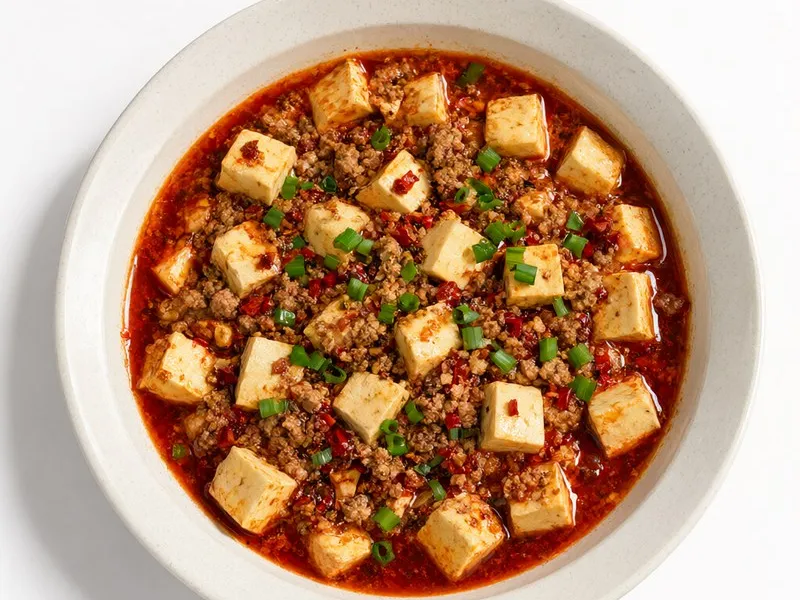
Ingredients 食材
- 400 g soft tofu, cut into 2 cm cubes嫩豆腐 400 克,切 2 厘米方块
- 150 g ground pork or beef猪肉末或牛肉末 150 克
- 1.5 tbsp Pixian doubanjiang, finely chopped郫县豆瓣酱 1.5 勺,剁细
- 3 cloves garlic, 1 tsp grated ginger, 2 scallions蒜 3 瓣、姜末 1 小勺、小葱 2 根
- 1 tsp ground Sichuan peppercorn, 1 tbsp cornflour slurry, 1 tsp sesame oil花椒粉 1 小勺、水淀粉 1 勺、香油 1 小勺
What to buy 怎么买
Soft tofu + Pixian doubanjiang. Soft tofu is sold in water-filled tubs labelled soft; silken tofu is too fragile. Doubanjiang is labelled Pixian chili bean paste or chili bean sauce in the Asian aisle. If you cannot find it, use gochujang mixed with a little white miso.
软豆腐买水盒上标 soft 的,silken 太嫩容易碎。豆瓣酱在亚洲区找 Pixian chili bean paste 或 chili bean sauce;买不到可用韩式辣酱加一点白味噌顶替。
Method 做法
- 1Slide the tofu cubes into a pan of lightly salted hot water and hold them just below a simmer for two minutes. This firms the outside so the cubes survive the sauce.豆腐块滑进淡盐热水,保持将开未开两分钟。外层收紧后,后面翻酱才不容易碎。
- 2Heat a little oil in a wide nonstick pan and brown the pork over high heat, breaking it into small crumbs. Push it to one side.宽平底不粘锅放少许油,大火把肉末炒散炒香,再拨到一边。
- 3Lower the heat, add the doubanjiang, garlic and ginger to the empty side, and fry for thirty seconds until the oil turns red. Do not let the chilli paste burn.转小火,空出的一边下豆瓣酱、蒜和姜,炒三十秒到油变红。别让豆瓣酱烧糊。
- 4Add 200 ml water or stock and a pinch of sugar, bring to a simmer, then slide in the drained tofu. Simmer gently for five minutes without stirring, shaking the pan instead.加 200 毫升水或高汤、一撮糖,煮开后把沥干的豆腐滑进去。小火煮五分钟,不要搅,晃锅就好。
- 5Stir the cornflour slurry and add it in two rounds, shaking the pan between each, until the sauce clings to the tofu. One minute more.水淀粉搅匀,分两次下,每次都晃匀,直到汁能裹住豆腐。再煮一分钟。
- 6Turn off the heat, scatter the Sichuan peppercorn and scallions, and drizzle the sesame oil over the top. Serve with rice.关火,撒花椒粉和葱花,淋香油。配米饭上桌。
Mapo tofu is the dish that separates a pantry from a collection of ingredients. Everything in it is cheap and shelf-stable — tofu, minced meat, chilli bean paste, peppercorns — yet the result tastes like it came from a restaurant with a lazy Susan and a fish tank. It also happens to be one of the fastest dinners in the Chinese repertoire, which is why it belongs in every student’s rotation.
The name is worth a note. “Ma” refers to the numbing tingle of Sichuan peppercorn, “po” to the grandmother who supposedly sold the dish from a roadside stall in Chengdu. The story is probably embellished. The combination of numbing and spicy is not.
Three layers, one pan
The flavour of mapo tofu is built in three separate moments, and each one matters. First, the pork is browned hard so it becomes crisp little crumbs rather than a soft mince. Second, the doubanjiang is fried in oil until the oil turns red; this is where the fermented bean flavour blooms and loses its raw edge. Third, the ground Sichuan peppercorn goes in off the heat at the very end, because its aromatic compounds are volatile and cooking them turns the tingle into a dull bitterness.
Skip any one of those and the dish still works, but it tastes flat. Do all three and it tastes like Sichuan.
You do not need a wok
A wide nonstick pan is better here than a wok for most home cooks. Tofu is fragile, and a flat bottom lets you slide it in and shake the pan without chasing cubes up sloping walls. The pan also holds an even layer of sauce, which is what you want: the tofu should be half-submerged, not swimming.
Warm the tofu in salted water before it meets the sauce. Two minutes is enough. The salt tightens the outer surface slightly and drives out a little water, so the cubes hold together and absorb sauce instead of leaking it. Drain them gently and slide them in; do not dump them from a height.
The sauce, and how thick it should be
Authentic mapo tofu is glossy and slightly loose, not a thick paste. The cornflour is there to bind the oil and stock into something that coats the tofu, not to turn the dish into gravy. Add the slurry in two rounds and judge after each one. If you can drag a spoon through the sauce and the line closes slowly, it is right.
The Sichuan peppercorn should be ground fresh if possible. Pre-ground pepper loses its aroma within weeks. Toast whole peppercorns in a dry pan for thirty seconds, then crush them with the back of a spoon or a pestle. You want a coarse powder, not dust.
Heat, substitutions and a vegan version
Doubanjiang brands vary wildly in salt and heat. Start with one tablespoon, taste after it hits the oil, and add more if needed. If the dish tastes salty rather than spicy, the paste was heavy-handed; a pinch of sugar and a splash of water will pull it back.
For a vegan version, replace the pork with finely chopped shiitake mushrooms and a handful of crushed walnuts. Brown them the same way, and add an extra teaspoon of soy sauce. The texture will not be meat, but the savoury depth will be there.
Serve it over hot rice with a plain green vegetable on the side. The sauce is rich enough that a plate of boiled greens with a drop of sesame oil is the correct contrast. Leftovers keep for two days, but the tofu will release water and the sauce will thin; reheat gently in a pan, not the microwave, and add a little cornflour slurry if needed.
Questions 常见问题
I cannot find doubanjiang. What can I use?
Gochujang mixed with a little white miso is the closest emergency substitute, though it is sweeter and less fermented. Do not use plain chilli sauce; it has neither the depth nor the salt.
My tofu broke into pieces. What went wrong?
Either the tofu was silken rather than soft, or it was stirred. Use soft tofu, warm it in salted water first, and move the pan rather than the spoon.
Is this very spicy?
It is more numbing than hot. The Sichuan peppercorn creates a tingling sensation rather than burn. For less heat, halve the doubanjiang and add a pinch more sugar.