Main course · Chinese home cooking
Tomato and Egg Stir-fry, the 12-Minute Version
12分钟番茄炒蛋
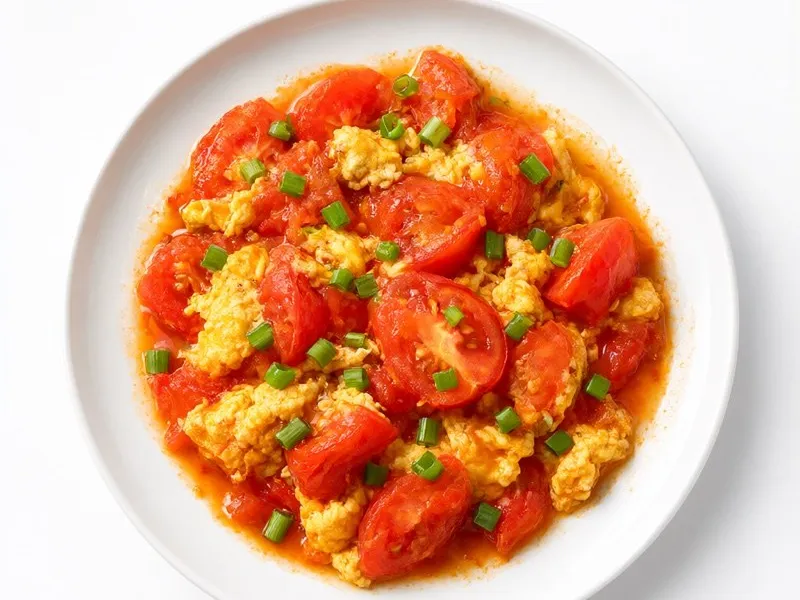
The Chinese comfort dish every student learns first, done properly in 12 minutes: soft egg curds, tomatoes cooked down to a glossy sauce, and the salt-in-the-tomatoes trick that stops it going watery.
- Total
- 12 min
- Hands-on
- 4 min
- Yield
- Serves 2
Ingredients 食材
- 2 ripe tomatoes, cut into wedges熟番茄 2 个,切滚刀块
- 4 eggs鸡蛋 4 个
- 2 scallions, whites and greens separated小葱 2 根,葱白葱绿分开
- Salt, and half a teaspoon of sugar盐,外加半茶匙糖
What to buy 怎么买
Ripe tomatoes (on-the-vine or Roma). Look for tomatoes that feel heavy for their size and smell faintly sweet at the stem. Roma tomatoes are firmer and less watery, so they need less reduction time. Pale, hard supermarket tomatoes still work, but give them an extra minute.
挑同样大小里手感更沉、蒂部有淡淡番茄香的。Roma 番茄更紧实、水分少,收汁更快。颜色发白、硬邦邦的也能做,多炒一分钟。
Method 做法
- 1Beat the eggs with a splash of water and a pinch of salt until no clear white remains. The water is what keeps the curds soft.鸡蛋加一小勺水和一撮盐打散,打到没有透明蛋清。水是让蛋嫩的关键。
- 2Get a wide pan properly hot, add oil, and pour in the eggs. Push them slowly into large soft curds and take them out while the centre still looks underdone.宽锅烧到够热,下油,倒蛋液。慢慢推成大块嫩蛋,中心还看着没全熟时就盛出来。
- 3In the same pan, add the tomato wedges and the scallion whites, and salt them now. Salt drawn into the tomatoes is what pulls out the juice you will reduce into sauce.同一口锅下番茄块和葱白,现在就放盐。盐进番茄才会逼出后面要收成酱的汁水。
- 4Cook until the tomatoes slump and the pan liquid thickens and turns glossy, about four minutes. Add the sugar here.炒到番茄塌软、锅里汁水变浓发亮,约四分钟。糖在这一步加。
- 5Return the eggs, fold twice so the curds soak up sauce without breaking, scatter the scallion greens, and serve over rice.蛋回锅,翻两下让蛋块吸酱但别炒散,撒葱绿,盖饭上桌。
Every Chinese household has a version of this dish, and every household believes its version is the correct one. Some families sweeten it until it is practically jam. Others refuse sugar on principle and season with nothing but salt and a few drops of soy. Arguing about it is half the fun, and it is also the point: tomato and egg stir-fry is the dish Chinese cooks use to teach beginners, because it contains every fundamental skill in miniature — heat control, timing, seasoning to taste — and forgives almost every mistake except one.
The unforgivable mistake is serving it watery. A plate of tomato and egg should hold a glossy, clinging sauce, not a puddle of pink water soaking into your rice. Getting that sauce is not luck and it is not cornflour. It is a sequencing decision: salt the tomatoes early, and let their own juice reduce in the pan before the eggs go back in.
Why the order of operations matters
Tomatoes are roughly ninety-five percent water. Cut them open and that water wants out. Salt is the lever: it draws the juice to the surface quickly and evenly, which means the pan fills with tomato liquid early, while you still have time to boil it down into something concentrated. Salt them late and the juice arrives after you have plated, which is exactly the puddle problem.
The eggs have the opposite requirement. Egg protein tightens and squeezes out moisture the longer it cooks, so soft curds demand a hot pan and a short stay. Beat in a splash of water before cooking — it sounds wrong and works beautifully, because the extra water turns to steam inside the setting protein and pries the curds apart from within. Pour the eggs into a pan that is genuinely hot, push them into large folds rather than scrambling them fine, and remove them while the centre still looks glossy and underdone. They will finish cooking in the residual heat of the plate.
The twelve minutes, honestly counted
Four of them are prep: wedging the tomatoes, separating scallion whites from greens, beating the eggs. Eight are at the stove, and only the middle four of those need your attention. This is the dish to cook on the night you have a lecture at nine and a sink you refuse to touch: one pan, one bowl, one plate.
Start the rice first if you want it simultaneously; the stir-fry waits for nobody but also forgives a two-minute delay better than most.
Variations worth knowing
A teaspoon of ketchup in the sauce is a dorm-room secret that adds both colour and a fruity acidity; purists will deny it and then ask for the recipe. A few drops of light soy sauce at the end deepens the savoury edge without making the dish taste of soy. Some cooks add a sliced green chilli with the scallion whites for heat. None of these are wrong. The only wrong version is the watery one, and you now know precisely why it happens.
Serve it over steamed rice, or — the truly lazy route — over instant noodles drained a minute early. The sauce clings to noodles even better than to rice, and no one in the history of this dish has ever complained about that.
Questions 常见问题
Why does my version come out watery?
Almost always because the salt went in late or not at all, so the tomato juice never got drawn out and reduced. Salt the tomatoes at the start and let the pan liquid thicken before the eggs return.
My eggs turn rubbery. What am I doing wrong?
Two usual causes: the pan is not hot enough when the eggs go in, so they stew instead of setting; or they stay in the pan too long. Pull them while the centre still looks slightly underdone — they finish off the heat.
Sugar in a savoury dish?
Half a teaspoon, not a dessert. It rounds the tomato acidity the way Chinese home cooks have always done it. Omit it if you prefer, but taste first.