Light meal · Chinese home cooking
Steamed Egg Custard: The 15-Minute Comfort Food
蒸水蛋:15分钟的温柔家常味
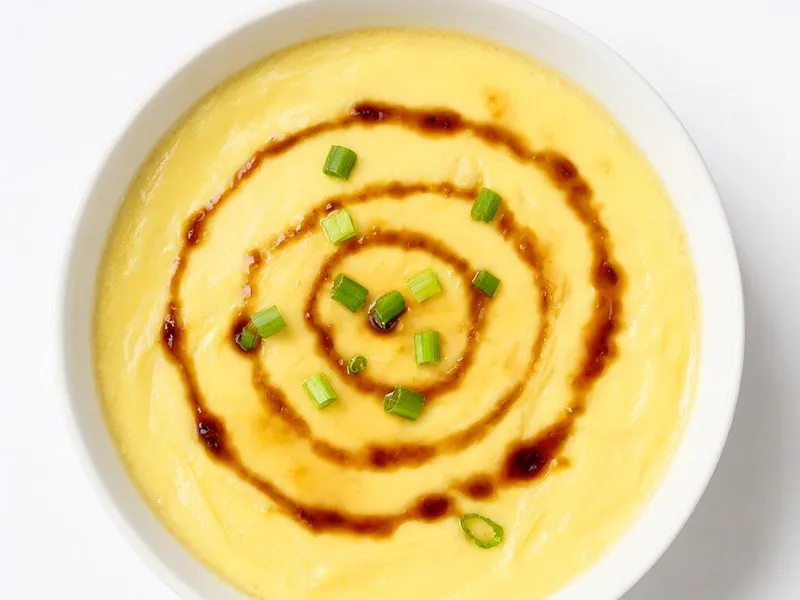
Silky steamed eggs with soy and sesame oil — the softest, cheapest dinner in the Chinese repertoire. A 1-to-1.5 egg-to-water ratio and a lid are all it takes.
- Total
- 15 min
- Hands-on
- 5 min
- Yield
- Serves 2
Ingredients 食材
- 3 large eggs大鸡蛋 3 个
- 270 ml warm water, about 1.5 times the egg volume温水 270 毫升,约蛋液的 1.5 倍
- 1 tsp light soy sauce, 1 tsp sesame oil生抽 1 小勺、香油 1 小勺
- 1 scallion, finely chopped小葱 1 根,切细
What to buy 怎么买
Large eggs. Use fresh large eggs and warm tap water, not hot water, which starts cooking the egg as you pour. Light soy sauce is labelled light soy sauce; dark soy is too heavy for this delicate custard.
用新鲜大鸡蛋和温自来水,别用热水,倒下去就开始把蛋烫熟。生抽认 light soy sauce;老抽太重,会压住蛋香。
Method 做法
- 1Beat the eggs with a pinch of salt until smooth, then stir in the warm water. Warm, not hot, water blends without cooking the egg.鸡蛋加一撮盐打匀,再拌入温水。温水而不是热水,才不会把蛋烫熟。
- 2Pour the mixture through a fine sieve into a shallow bowl. This removes the foam and the strands of egg white that would otherwise set into lumps.蛋液过细筛倒进浅碗,滤掉泡沫和蛋清筋,这些都会蒸成疙瘩。
- 3Cover the bowl with a plate or a piece of foil, leaving a small gap at one side. The cover keeps condensation from dripping onto the surface.碗上盖盘子或锡纸,留一个小缝。盖住是为了防止水汽滴到表面。
- 4Put the bowl in a steamer over gently simmering water and steam for eight to ten minutes. Keep the heat low; a rolling boil makes the custard bubble and turn porous.碗放进蒸锅,水保持微沸,小火蒸八到十分钟。大火会让蛋出现蜂窝。
- 5Check by tapping the side of the bowl. The centre should wobble like soft jelly, not slosh. If it is still liquid, steam two more minutes.轻拍碗边检查。中心应该像软果冻一样晃,而不是流动。还稀就再蒸两分钟。
- 6Take it out, drizzle the soy and sesame oil over the surface, and scatter the scallion. Serve immediately with rice.取出,淋生抽和香油,撒葱花,立刻配米饭上桌。
Steamed egg custard is what Chinese families make when someone is sick, when the fridge is nearly empty, or when a small child needs to eat something soft and warm. It is also one of the cheapest, fastest dinners you can make as a student, and one of the easiest to get wrong.
The ingredients could not be simpler: eggs, water, salt, a little soy and sesame oil. The technique is a series of small decisions — water temperature, ratio, straining, covering, heat level — that determine whether you get a silky custard or a rubbery, pitted sponge.
Why the ratio matters
Eggs set when their proteins unwind and bond into a network. Water dilutes those proteins, so the network forms more slowly and stays more tender. One part egg to one and a half parts water is the standard home ratio: soft enough to eat with a spoon, firm enough to hold its shape.
Measure by volume, not weight. Crack the eggs into a measuring jug, note the volume, and add one and a half times that amount of warm water. For three large eggs, that is about 180 ml of egg and 270 ml of water.
Use warm water, not cold and not boiling. Cold water takes longer to heat through and can set unevenly; boiling water starts cooking the egg as you pour. Warm tap water is right.
Strain, cover, and keep the heat low
Straining the mixture through a fine sieve removes foam and the tough bits of egg white. Those bits set into hard little lumps and ruin the texture. If you do not have a sieve, let the mixture sit for a few minutes and skim the foam off the top with a spoon.
Covering the bowl is the second key. Steam condenses on the lid and drips down; if those drops land on the custard, they leave craters. A plate, a piece of foil, or heatproof cling film all work. Leave a small gap so the steam can escape and the pressure does not build.
Low heat is the third. A gentle simmer produces soft, even steam. A rolling boil makes the custard bubble from below, and those bubbles become the honeycomb texture everyone recognizes as a mistake.
The sauce is the point
Plain steamed egg is bland by design; the sauce is what makes it taste like a dish. Light soy brings salt and savoury depth, sesame oil brings fragrance, and scallions bring freshness. Drizzle both over the top just before serving, not before steaming, or the soy will sink and stain the custard.
A few drops of chilli oil or a pinch of white pepper are good additions. So is a teaspoon of fried shallot, if you happen to have some. The custard is a blank surface; almost anything savoury works on top.
Variations worth trying
Minced pork steamed with the egg is a classic: brown a spoonful of pork with soy and ginger, then scatter it over the custard before serving. Small shrimp or clams can be steamed into the custard itself, but add them raw and give them an extra two minutes.
For a richer version, replace some of the water with warm chicken stock. For a lighter one, use two eggs and increase the water slightly. Both work; the ratio is a starting point, not a law.
Serving and timing
Steamed egg is best eaten immediately, with rice and a simple vegetable. It also makes a good breakfast on its own. Leftovers keep for a day in the fridge, but the texture suffers; reheat gently in a steamer for two minutes rather than in the microwave, which turns it rubbery.
Questions 常见问题
Why did my custard turn into honeycomb?
The heat was too high, the water was too hot, or it steamed too long. Egg proteins tighten and squeeze out water when they overcook; gentle heat and a covered bowl keep the surface smooth.
What is the right egg-to-water ratio?
One part egg to one and a half parts water by volume makes a soft, silky custard. More water gives a softer set but is easier to break; less water gives a firmer, more eggy result.
I do not have a steamer. How else can I cook it?
Use a wide pot with a lid and a small rack or an inverted bowl inside. Bring an inch of water to a simmer, set the covered bowl on the rack, and steam over low heat.